
BIMA Digital Distribution Session // STEP II - AGENDA
RE_BIMAbe1065
Following our digital session that brung to participants best practices on digital distribution, monetising content and using data to optimise performance, you will find below a draft of our discussion during the days.
Members, feel free to ask more details or key ressources to info(at)bima.be.
We have a list of key tools for you…
Programma :
Digital Distribution and Data Analytics: Growth Strategies for Independent Labels
Bevestigde namen:
NiKolaas de Belie – Head of Believe & TuneCore, Northern Europe
Benjamin Pruvost – Music Streaming & Digital Distribution Expert, IDOL – Head of label relation for 15 years.
BIMA SESSION #3
Digital Distribution & DataAnalytics
Growth Strategies for Independent Labels in Belgium (Benelux)
Objective: This session provides Belgian independent labels with essential information on digital distribution and the strategic use of data to improve market visibility and revenues. After an overview of digital distribution and the specifics of the Belgian market, we will take an in-depth look at the services a digital distributor can provide, from the digital supply chain to best practices for connecting with audiences on streaming platforms. The role of data in decision-making will be explored through discussions led by experts, giving labels practical tools to analyse performance, optimise campaigns and adapt content to changing trends.
Agenda
- Introduction
- Moderator: Presentation of the panel and speakers.
- Round Table: Brief introduction of each participant, their role, and expertise.
- Panel Objectives: Overview of key topics: digital distribution, monetisation strategies, and data-driven insights.
- State of Play: Digital Distribution in Belgium / Benelux
- Overview of Services: General presentation of Believe and TuneCore.
- BNL Market Analysis: Insights into the Belgian digital music market: market size, challenges for independent labels, segmentation of free vs. paid subscribers, platform preferences (e.g., Spotify, iMusique, Deezer).
- Challenges for Independents: Access limitations to tools like Discovery Mode and playlist integration hurdles.
- Key Points to covered:
- Current trends in the digital music market in Belgium and Benelux.
- The role of distributors on streaming platforms and general strategies for Belgian artists.
- The Digital Distribution Supply Chain
- Digital Distribution Management: Best practices for optimising metadata (e.g., Believe Backstage) to enhance territorial reach.
- Relations with DSPs: Building strong connections with platforms like Spotify/ deezer / Apple Music to improve artist positioning and support from distributors like Believe. (what Believe do / What label do not)
- Key Points to covered:
- Equip labels with tools and strategies to optimize their digital distribution chain,
- increasing market impact and visibility.
- The Importance of Data in Label Strategy
- Presentation by Benjamin Pruvost: The role of data analysis in strategic development for independent labels.
- Discussion with Benjamin Pruvost:
-
- Why is data analysis crucial for labels?
- Key data points to track to assess a release’s success.
- Recommended tools and analytics for performance tracking & acting.
- Key Points:
- Different types / meaning of data (metadatas, consumption, user’s behaviour, CRM / Direct to Fan …)
- Avoid bias, misinterpretation; take the context into account
- Using Data in Your Strategy
We provide participants with practical knowledge on incorporating data into their label’s development strategies.
- Performance Analysis: benchmark your data with the market, similar artists or labels
-
- Examples: market shares territories & dsps
- Identify anomalies in your data
- Examples: fix technical / legal problems, identify opportunities
- Real-Time Insights: Adapting release strategies and promotional tactics based on immediate audience responses.
- Example: Assessing real-time performance of new releases to identify popular tracks and adjust promotions accordingly.
- 3rd party playlists strategy:
- Example: identify and assess relevant indie curators playlists.
- Key Points:
- guide labels toward a proactive and strategic use of data to better understand their market and maximise impact.

AI – Reserve your rights!
RE_BIMAbe1065
The use of copyrighted works for AI training or machine learning is subject to specific authorisations/licences which need to be secured in advance. To best protect their rights, all copyright owners should clarify their position on this as an additional guarantee. Two steps are advisable:
1. Declare on your company website that your rights are reserved, communicate this to all partners to whom you have licensed music and ideally also to AI companies.
2. At website and service level, ask your commercial partners to make a similar express reservation of rights clear in their terms and conditions, and to implement technical protection measures to avoid circumvention of rights
See recent examples from Beggars,Sugar & Merlin).
If you have any questions, you can contact directly: mphilibert@impalamusic.org

GPRS - Label & Distributors concerned
RE_BIMAbe1065
En tant que labels ou distributeurs, vous avez peut-être déjà entendu que la législation sur les produits a été modifiée en Europe. Elle est en transposition depuis 2023 et entrera en vigueur le 13 décembre 2024. Le VUT (équivalent de la BIMA en Allemagne) a partagé les conseils ci-dessous préparés pour ses membres.) Un grand merci à Jörg de VUT !
Egalement ci-dessous, un FAQ sur la question.
From VUT: Product Safety Regulation (GPSR) – What Music Entrepreneurs Need to Know
The EU’s Product Safety Regulation, also known as the General Product Safety Regulation (GPSR), aims to ensure that goods purchased by consumers are safe. It is essential for those in commerce – especially online retail, manufacturing, and importing – to prepare for the new requirements and implement the necessary measures. This applies regardless of whether the transactions are B2B or B2C, or if the goods are new or used. The regulation covers all products intended for consumers.
The Product Safety Regulation will come into effect on December 13, 2024. Products offered on the EU market before December 13, 2024, can continue to be sold, even if they do not meet the GPSR requirements. However, all products must comply with the previous Product Safety Act and must have been marketed before the effective date. Products manufactured before December 13 but only marketed after will be subject to the new GPSR requirements.
Important for Amazon Sellers: The information requirements apply to all products, even if they were offered before December 13, 2024.
The Product Safety Regulation requires that information be provided directly in the listing, not just via a link.
Required information includes:
- Name, trade name or brand, as well as postal and email address of the manufacturer for contact purposes must be clearly and visibly placed in the listing; linking is generally not sufficient.
- For manufacturers without an EU presence: name and address of a responsible person within the EU.
- The product must be clearly identifiable, including an image, product type, and other identifiers. The Product Safety Regulation emphasizes the obligation to display an image of the product, which is typically fulfilled with a product photo. In exceptional cases, where photography involves disproportionate effort, an illustration or pictogram can be used to identify the product.
- This information should be easy to locate and not hidden in continuous text. For instance, it can be labeled under “Product Safety” or “Product Safety Information.” Alternatively, a clearly visible dedicated tab in the online listing can be created. Information in the imprint or FAQ section is insufficient.
- Warnings or safety information must be in the official language of the respective member state, clearly visible on the product, packaging, or in accompanying documentation, e.g., for toys or cosmetics.
For more information and practical examples of the GPSR requirements in German, visit:https://www.haendlerbund.de/de/ratgeber/recht/produktsicherheitsverordnung andhttps://www.versandhandelsrecht.de/2024/04/19/produktsicherheitsverordnung
Other info (compiled by IMPALA):
Please share any other examples. Most countries have detailed advice on this already as it has been in transition since 2023, if you have any good references, let us know!
And in the meantime, here are a few other references:
NAMM association of music merchants in the USA: https://www.namm.org/policy/business-compliance/understanding-general-product-safety-regulations-gpsr-eu

Open letter to Belgian Competition Authority
RE_BIMAbe1065
BIMA have sent a request to Belgian Competition Authorithy to investigate TikTok’s behaviour and for measures to be put in place to protect the independent sector from harm given the unavoidable economic partner status of TikTok. Our request includes interim measures to maintain the status quo prior to TikTok’s recent actions to avoid harm while investigations take place.
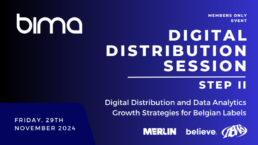
BIMA Digital Distribution Session // STEP II
RE_BIMAbe1065
Following our last session on the new challenges of digital distribution with guests Merlin & WINAMP, we will continue with this theme by bringing you best practices on digital distribution, monetising content and using data to optimise performance. The panel will cover key topics such as the current state of digital distribution in Belgium, effective strategies to grow audiences for indie labels and their artists, the importance of data in optimising performance, and ways to maximise revenues in Belgium and abroad.
After an overview of digital distribution and the specifics of the Belgian market, we will take an in-depth look at the services a digital distributor can provide, from the digital supply chain to best practices for connecting with audiences on streaming platforms. The role of data in decision-making will be explored through discussions led by experts, giving labels practical tools to analyse performance, optimise campaigns and adapt content to changing trends.
Quand : VENDREDI 29 NOVEMBRE 2024
Waar : N.E.W.S DISTRIBUTION
DENDERMONDSESTEENWEG 140
9000 GENT – BELGIUM
Programma :
10h00 – 13h00 // BIMA SESSION #3
Digital Distribution and Data Analytics: Growth Strategies for Independent Labels
Bevestigde namen:
NiKolaas de Belie – Head of Believe & TuneCore, Northern Europe
Benjamin Pruvost – Music Streaming & Digital Distribution Expert, IDOL – Head of label relation for 15 years.
Merci de confirmer votre présence avant le vendredi 22 novembre.
Graag jullie aanwezigheid bevestigen voor Fridag 22 november.

Call for a meaningful implementation of the AIAct
RE_BIMAbe1065
BIMA joins a broad coalition of music and cultural organizations urging the EU to implement the #AIAct in a way that truly empowers music creators and rights holders to protect and enforce their rights effectively.

Discount on FIFTY LAB Pro Pass
RE_BIMAbe1065
Thanks to our partner IMPALA, we can provided to all BIMA members a 15% discount on pro-pass for fifty lab 2024 (Brussels, 13th – 15th November)
To use it, simply head to the pro ticket platform here and add a ticket to your basket.
Use the code IMPALA2024 to claim your discount.
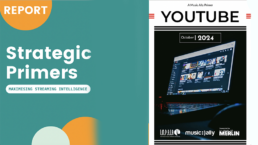
Strategic Primer : Youtube Music
RE_BIMAbe1065
Strategic Primers’ project provide independent labels with comprehensive intelligence on how to maximise key streaming opportunities for their artists, and ensure that they get proper visibility on streaming platforms. This one is dedicated to YouTube.
Other Primers on Spotify, Amazon Music and Apple Music are also available for members.
Just drop an email to info(at)bima.be
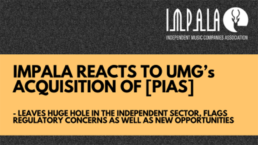
IMPALA & BIMA REACT TO UMG’s ACQUISITION OF [PIAS] – LEAVES HUGE HOLE IN THE INDEPENDENT SECTOR, FLAGS REGULATORY CONCERNS AS WELL AS NEW OPPORTUNITIES
RE_BIMAbe1065
One of the founders of BIMA & IMPALA, the loss of [PIAS] to the independent sector will be felt in many different ways, discussed IMPALA’s executive committee following the news this week that UMG had bought 100% of the shares of the leading independent company. As [PIAS] is no longer an independent entity, the company is leaving BIMA & IMPALA.
Geert de Blaere, chair of Belgian association BIMA and IMPALA treasurer : “The Belgian market owes a debt of gratitude to [PIAS], which shows all entrepreneurs what is possible and this will also always be the case. However the impact in the independent sector will be structural, significant and long lasting. This is completely different to a share deal as UMG takes over the market share of [PIAS]. Scale and stability in the whole independent sector will be lost. Incremental shifts in the market across the majors leverages disproportionate influence in the hands of a few companies. Each time that happens the result is more control over how the market develops.”
The executive committee of IMPALA thanked [PIAS] co-founders Michel Lambot and Kenny Gates for their support and insight over the past twenty four years. Already recognised with IMPALA’s independent outstanding contribution award in 2023 on [PIAS]’ 40th anniversary, Kenny will continue to run the company and Michel will remain active in the music and broader cultural sector through a new business, Emotions.
Helen Smith, executive chair of IMPALA, commented: “[PIAS] is an inspiration for all entrepreneurs in music. We will miss Michel and Kenny in so many ways. We congratulate them on their achievements and thank them for their leadership. This will leave a huge hole in the independent sector and at IMPALA, with Michel on our board for 24 years and instrumental in achieving all our milestones. We thank [PIAS] for being one of the first members to contribute to IMPALA’s carbon calculator, also stepping up for our digital work, our EDI task force and other groups. To hear [PIAS]’ story check their 20MinutesWith podcast with the late Juliana Koranteng.”
Speaking on behalf of IMPALA’s executive committee, Dario Draštata, IMPALA Chair and Chair of RUNDA Adria added: “[PIAS] will remain a true inspiration across Europe and its imprint on the sector will continue through various bodies the company were instrumental in establishing, from Merlin to IMPALA as well as WIN. More recently the company promoted telling the story of labels and the value of music, a role that has been taken on by the think tank ORCA.”
Chair of IMPALA’s streaming group and CEO of Everlasting Records and Popstock Distribuciones, Mark Kitcatt continued: “Michel Lambot has been one of the keenest and most insightful participants in our plan to reform streaming to make it fairer, to place artists at the centre of the streaming ecosystem and encourage platforms to highlight support and fairly reward the whole, diverse range of musical creation, with Adrian Pope also playing a key role in developing our strategy on digital issues. We all look forward to news of Michel’s new company Emotions and wish both Kenny and Adrian well with the new chapter for [PIAS]. IMPALA’s work on the RAAP case is another great example, with Michel a staunch believer in fairness and the need for reciprocity in trade rules to raise the level of protection worldwide.”
IMPALA’s executive committee also discussed how unchecked concentration in the music market continues to be a serious problem. The move by UMG squeezes the independents further in an already very concentrated market. It also goes against the principle established by the European Commission over ten years ago during UMG’s takeover of EMI that UMG is already too big.
Helen Smith, IMPALA’s Executive Chair commented: “IMPALA expects regulators to investigate the acquisition and answer the question the industry is asking about how it is possible for UMG to gain more market share after it was already considered too big. We would expect both physical and digital markets to be assessed including for distribution services, as well as the impact on competitors, digital services, artists and fans. A share deal is one thing, this is something else.”
UMG’s ability to expand through acquisitions has been on ice as it had a ten year ban imposed on it by the European Union following UMG’s attempt to buy EMI in 2012, which ended in UMG being forced to sell over a third of EMI. The bottom line is UMG’s acquisition of [PIAS] will increase the power of UMG across Europe and beyond, including the UK and the USA, and IMPALA expects regulators in these jurisdictions to take action. The pursuit of key independent players by all three majors has been happening in national markets across Europe and elsewhere and there is a serious risk of this continuing and posing real disruption for the independent sector.
IMPALA chair Dario Draštata commented: “This type of creeping power is an issue across Europe. Apart from strengthening UMG in terms of market share, it eliminates a principal competitor and should be investigated. It also narrows options for artists and labels. It is not a question of an arithmetical increase of market share points by one major, but rather a sea change in the competitive dynamics of the music market, to the severe detriment of competitors and consumers. Sony has been doing the same and we see similar moves in Central and Eastern Europe with Warner Music Group buying stakes in several leading independent music companies across the region. The loss of such big players for the independent sector compounds the competitive impact and the risk is that this trend will continue. We have been signalling the problem of creeping dominance for many years and it’s time for a new competition approach to address this question.”
IMPALA also flagged that this is not just a regulatory question, it is a strategic issue for the sector and for all decision makers about growth and competition generally. President of IMPALA Francesca Trainini commented: “One of the challenges is to consider not just the impact of this consolidation, but whether the market conditions and finance options are there to support the growth of the next generation of companies bringing scale and power to the independent sector. Growing Europe’s “missing middle” was identified as a top priority by IMPALA in its very first action plan and it remains vital for the sector. We urge the new European legislature entering office now to take a fresh strategic approach. IMPALA has been working on this with its finance group and the board meeting next month will look at this further.”
IMPALA highlights how ongoing work in the sector will now be even more crucial. The question of independent distribution and access to market is just one example. IMPALA’s executive committee recognises the great work done over the years by [PIAS] as well as other independent distributors and also welcomed the recent news about Cargo Independent Distribution which provides scaled distribution options internationally for the sector.
Addressing other market developments that have been highlighted by IMPALA as a priority is also important. This includes addressing the risk of a two speed market following moves to reform how streaming revenues are allocated, as well as monetising TikTok and stopping their attempt to boycott Merlin, see here and here. This is on top of other factors which must be tackled to avoid haemorrhaging cash for music companies and artists across Europe, including the RAAP case. Control over collecting societies is also a concern and again will be exacerbated, both by the growing market share of UMG, and by the loss of strong independent voices on collecting society boards across Europe.
IMPALA also points to ongoing work on innovative solutions on the finance side to provide independents with different options, as well as opportunities to develop new approaches. This includes possible projects inspired by previous work, such as the divestment process carried out by IMPALA and Merlin, and also basic measures like tax credits.
Gee Davy, Interim CEO of AIM, added: “Kenny and Michel are fully deserving of the appreciation of the whole independent community for all they have done to champion and support the sector over many years. I am encouraged by their stated determination to continue in their support, albeit in a different way from within their new parent company, even while I am sad to see a great independent music business find that the only way to achieve further scale and survival leads them away from independence. Further consolidation is deeply concerning in reducing options and diminishing collective independent market share, impacting on fair competition and choice. However, I also appreciate that with increasing pressures from all sides it is more and more difficult to see how independents can achieve necessary scale for global success and find business exit options which protect staff and legacy. This is why in the UK, AIM continues to work with regulators to ensure an open market and is calling on the new Labour government to encourage investment in new music across all regions and nations of the UK through a tax credit scheme similar to the successful scheme in the UK film sector and similar schemes in other nations.”
Helen Smith summed up: “We are looking at this from multiple angles. We want to see more independent companies like [PIAS] not fewer. We need a revamp of exit strategy options, new solutions to access finance, provide tax incentives and grow our market share. A review of whether competition is fit for purpose in today’s music market is also in order, and proper solutions for issues like the RAAP case. Above all, it’s about a combination of strategies that put diversity at the top of the pyramid. There are plenty of solutions and we urge the whole market to join us on this exercise. It is credit to Michel and Kenny that the [PIAS] example is the springboard to re-opening these discussions.”

TikTok tente de boycotter Merlin
RE_BIMAbe1065
La situation entre TikTok et Merlin soulève des inquiétudes majeures pour le marché belge de la musique indépendante. TikTok refuse de renouveler son accord avec Merlin, qui court jusqu’au 31 octobre 2024, et s’adresse désormais directement aux labels pour conclure des accords individuels. Ce refus pourrait nuire à la diversité musicale et à la rémunération des artistes indépendants en Belgique.
De gespannen situatie tussen TikTok en Merlin baart ook de Belgische onafhankelijke muziekproducenten grote zorgen. De weigering om de collectieve overeenkomst met Merlin te verlengen kan immers de muzikale diversiteit en de vergoeding van onafhankelijke artiesten in België schaden. TikTok weigert haar overeenkomst met Merlin, welke loopt tot 31 oktober 2024, te verlengen en spreekt de labels nu rechtstreeks aan om individuele overeenkomsten af te sluiten.
FR (NL versie hieronder)
La BIMA ainsi d’autres membres d’IMPALA tirent la sonnette d’alarme concernant TikTok, qui tente de boycotter le renouvellement d’un accord collectif avec Merlin. Merlin représente de nombreux acteurs indépendants de la musique, dont PIAS, News ou encore CNR. Représentant 15% du marché de la musique, l’organisation négocie des licences au nom de ses membres auprès de toutes les plateformes. Cette situation est préoccupante, car Merlin joue un rôle crucial en négociant auprès des plateformes de services musicaux, en offrant des économies d’échelle et en garantissant la diversité et le choix pour les consommateurs
Il semble clair que l’objectif de TikTok est de payer moins pour la musique. De plus, la liberté des labels de gérer leurs droits est remise en question. Cette situation rappelle les tensions survenues en début d’année entre TikTok et Universal Music Group (UMG). Elle démontre que TikTok est prêt à adopter des stratégies agressives dans ses relations avec l’industrie musicale. Face à Merlin, TikTok semble aller encore plus loin en cherchant à affaiblir l’union formée par les grands acteurs indépendants de la musique, dans le but de renforcer sa propre voix face aux plateformes.
La BIMA (Belgian Independent Music Association) ne cache pas son indignation : « L’impunité de TikTok doit prendre fin, en appelant au boycott d’un des principaux représentants des indépendants pour des raisons fallacieuses, il est à craindre que les dirigeants de TikTok cherchent à imposer au marché de la musique des conditions de rémunération encore plus défavorables », avertit Geert de Blaere, Président de la BIMA, qui souligne que les conditions actuelles sont déjà loin d’être satisfaisantes. La plateforme rémunère en effet très faiblement les productions musicales qu’elle utilise, qui constituent pourtant une part essentielle de sa valeur. . Nous craignons que cette décision entraîne une fragmentation du secteur et une réduction des droits musicaux.
Mark KitKat, président du comité d’Impala en charge du streaming, dénonce ce procédé : «compte tenu du calendrier, il semble évident que l’intention réelle de TikTok est de fragmenter le secteur et de faire baisser la valeur de la musique indépendante, plutôt que de s’attaquer à la manipulation de la diffusion en continu. »
Impala, par la voix d’Helen Smith, appelle TikTok à la raison : « nous invitons TikTok à voir la valeur d’un accord collectif renouvelé par l’intermédiaire de Merlin et à collaborer à la croissance de cette partie importante de l’écosystème. Nous espérons que l’efficacité et le choix pour les utilisateurs de TikTok, (…) prévaudront et nous sommes impatients de développer cette partie vitale de l’écosystème. » IMPALA avait déjà soulevé des craintes concernant les écarts de valeur avec TikTok en avril, et ce dernier développement renforce nos préoccupations.
NL versie :
BIMA (Belgian Independent Music Association) en andere IMPALA leden trekken aan de alarmbel over deze poging van TikTok om de vernieuwing van een collectieve overeenkomst met Merlin te boycotten.
Merlin vertegenwoordigt talrijke onafhankelijke muziekspelers, waaronder PIAS, News en CNR. De Merlin-organisatie vertegenwoordigt 15% van de wereldwijde muziekmarkt en onderhandelt namens haar leden met alle digitale platformen over de voorwaarden voor het afsluiten van licenties.
Deze situatie is dus bijzonder zorgwekkend, aangezien Merlin een cruciale rol speelt in de onderhandelingen met platformen voor muziekdiensten, schaalvoordelen biedt en diversiteit en keuze voor consumenten garandeert.
Het lijkt vooral duidelijk dat TikTok minder wil betalen voor muziek. Bovendien wordt ook de vrijheid van labels om hun rechten te (laten) beheren in twijfel getrokken.
Deze situatie doet denken aan de spanningen die eerder dit jaar ontstonden tussen TikTok en Universal Music Group (UMG). Het laat zien dat TikTok bereid is om agressieve strategieën toe te passen in haar realtie met de muziekindustrie.
Tegenover Merlin lijkt TikTok zelfs nog verder te gaan door te proberen de vertegenwoordiger van de onafhankelijke muziekproducenten te verzwakken, met als enig doel de eigen positie tegenover de andere digitale platformen te versterken.
BIMA (Belgian Independent Music Association) heeft ook haar standpunt niet onder stoelen of banken gestoken: « Er moet een einde komen aan deze aanpak van TikTok. Door op te roepen tot een boycot van een van de belangrijkste vertegenwoordigers van de independents om oneigenlijke redenen, valt te vrezen dat TikTok nog ongunstigere voorwaarden willen opleggen aan de muziekmarkt », waarschuwt Geert De Blaere, voorzitter van de BIMA, erop wijzend dat de huidige voorwaarden al verre van marktconform zijn. “Het platform betaalt erg weinig voor de muziek die het gebruikt in vergelijking met andere platformen. We vrezen dat deze aanpak zal leiden tot een verdere versnippering van de sector en een verdere vermindering van de waarde van muziek. “
Ook Mark KitKat, voorzitter van Impala’s streamingcommissie, veroordeelde de stap: « Gezien de timing lijkt het duidelijk dat het TikTok’s echte bedoeling is om de sector te fragmenteren en de waarde van onafhankelijke muziek te verlagen, en niet de manipulatie van streaming aan te pakken zoals zij argumenteren. »
Ook Impala, bij monde van Helen Smith, roept TikTok op om tot rede te komen: « We nodigen TikTok uit om de waarde in te zien van een vernieuwde collectieve overeenkomst via Merlin en mee te werken aan de groei van dit belangrijke onderdeel van het ecosysteem. »
IMPALA uitte reeds in april haar bezorgdheid over de waardeverschillen met TikTok en deze laatste ontwikkeling versterkt nu onze bezorgdheid.